
How We Developed Our E‑Commerce Project? Technologies and Process Used
Muhammet Berat Arslan3 min read

How We Developed Our E‑Commerce Project?
Developing a modern e-commerce project is not just about creating a website where products are listed. User experience, performance, security, payment processes, shipping management, SEO infrastructure and admin panel management all need to work together properly.
In this project, our goal was to build a fast, easy-to-manage, mobile-friendly and scalable e-commerce infrastructure. We approached the process not only as a design or development task, but as an end-to-end digital system that supports and simplifies the sales operations of the business.
In the project, we chose a modern technology stack focused on performance, security and scalability. On the user interface side, we used React to create a fast and dynamic experience. On the backend side, we built a modular, maintainable and expandable structure with NestJS.
PostgreSQL was preferred for data management, while Redis was used as a caching layer to serve frequently used data faster. Docker made the application services more organized, portable and easier to manage. With Cloudflare CDN, static assets were delivered with low latency. TypeScript provided a safer and more error-resistant development process on both the frontend and backend.
The project was developed using modern technologies such as React, NestJS, PostgreSQL, Redis, Docker, Cloudflare CDN and TypeScript. This structure allowed us to create a fast, secure, manageable and long-term scalable e-commerce infrastructure.
Today, a successful e-commerce website is not limited to adding products and receiving orders. Users need to access the website quickly, browse products easily, make secure payments and complete the order process smoothly.
For this reason, performance, mobile responsiveness, SEO, security, payment infrastructure, shipping integration and ease of management were handled together in the project. Each feature was planned to improve the end-user experience and reduce the operational workload of the business.
Powerful Admin Panel
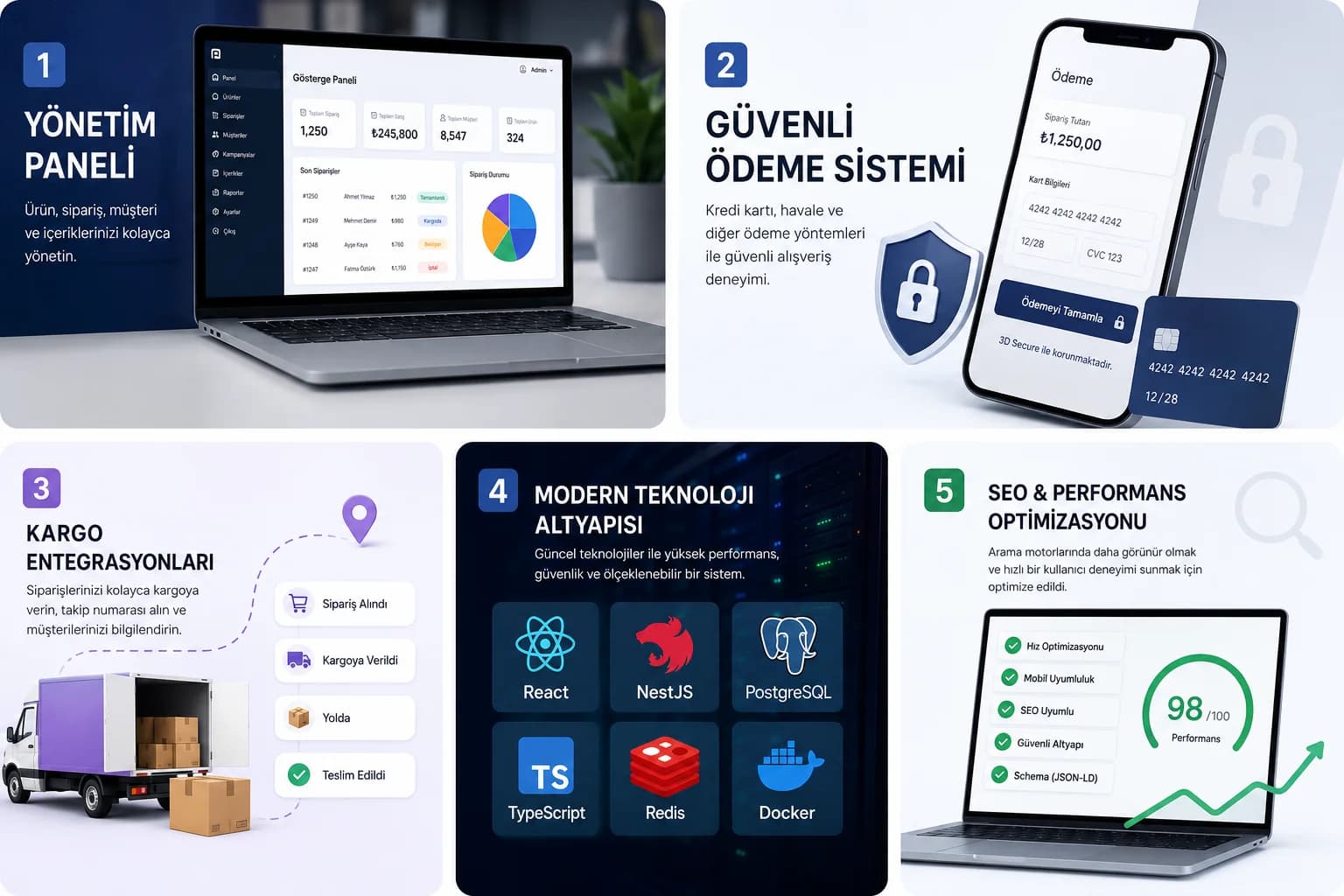
One of the most important parts of an e-commerce system is a powerful and easy-to-use admin panel. In this project, we made key processes such as product, category, order, customer, campaign, shipping, content and media management controllable from a single panel.
Thanks to the admin panel, the business can update products, track orders, create campaigns and manage website content easily without needing technical knowledge. This makes the system suitable for daily business operations instead of being fully dependent on developers.
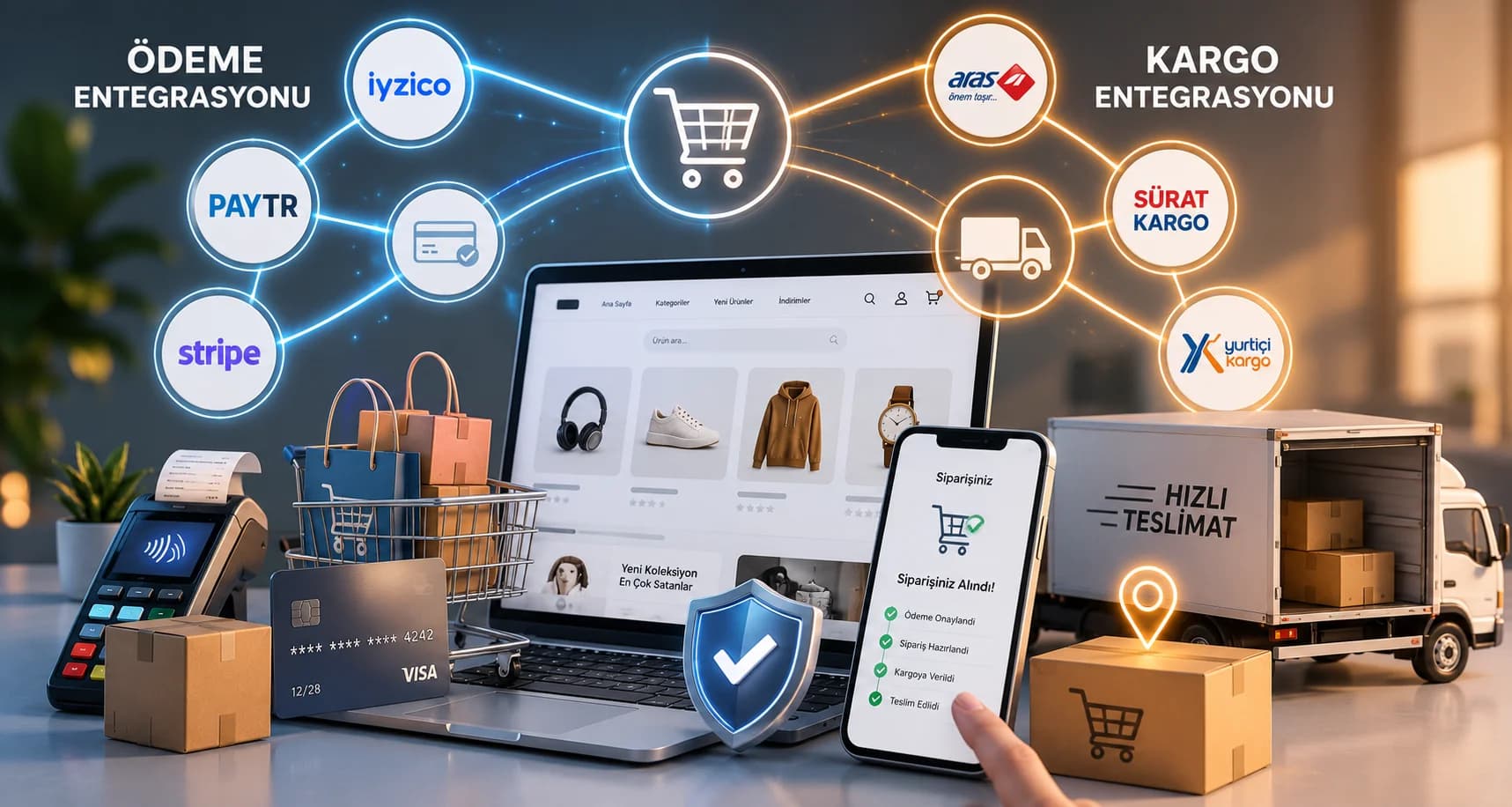
In an e-commerce project, payment and shipping processes directly affect user trust. For this reason, secure payment infrastructure and integrated shipping management were handled as key priorities in the project.
The goal was to allow users to complete their orders smoothly while enabling the business to track payment and delivery processes through the admin panel. As a result, post-sale operations became more organized and manageable.
How Was Secure Payment Implemented?
How Does the Shipping Integration Work?
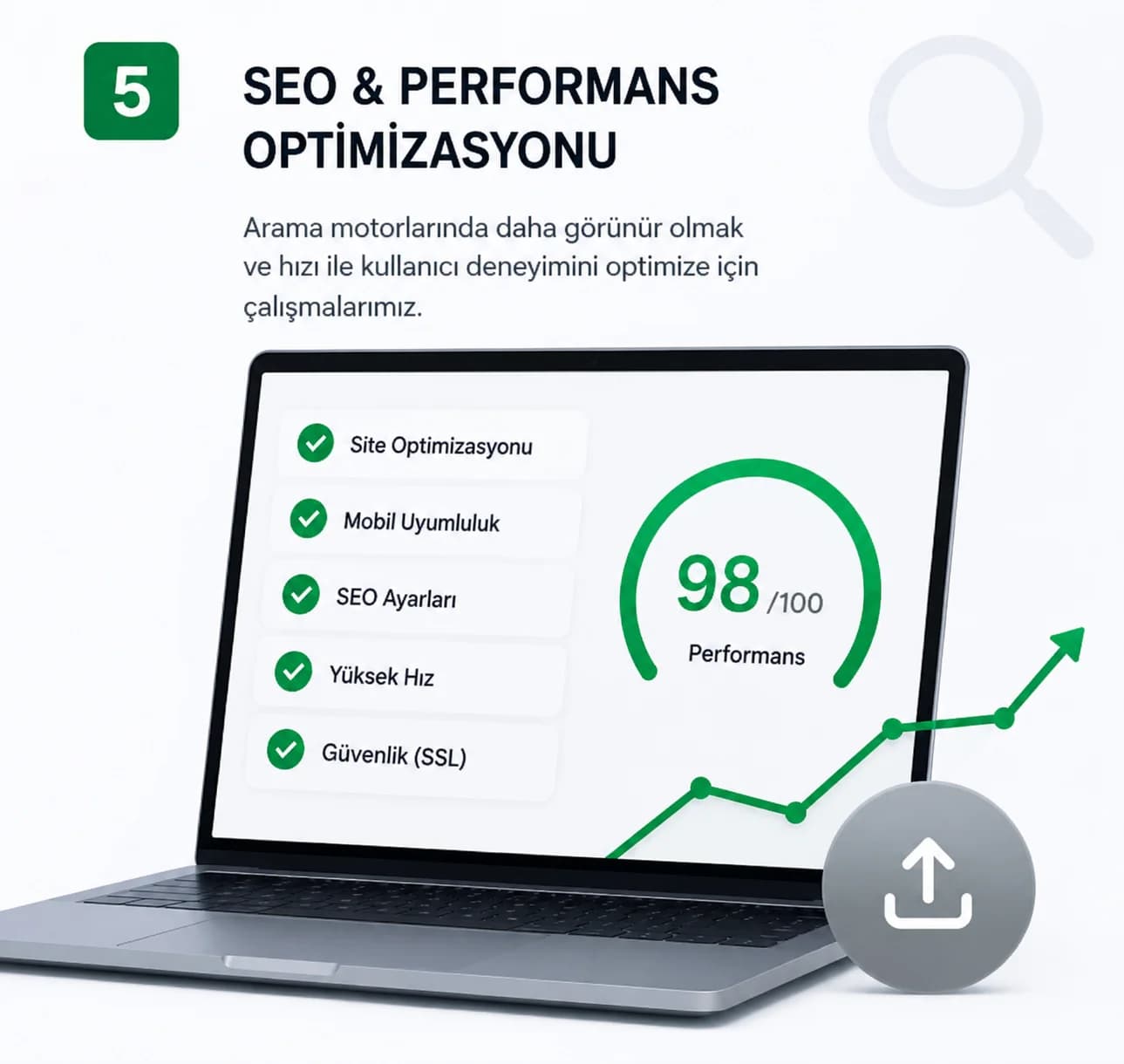
What SEO and Performance Improvements Were Made?
SEO & Performance Work
Since a large portion of users visit e-commerce websites from mobile devices, a mobile-first approach was adopted in this project. Page layouts, product cards, cart flow and checkout steps were designed with mobile usage as the priority.
As a result, users get a consistent, fast and easy-to-use experience whether they access the website from a phone, tablet or desktop device.

This project was not only an e-commerce website development process, but also a comprehensive system work that made the business’s digital sales operations stronger, more organized and easier to manage.
With the modern technologies we used, the powerful admin panel, secure payment infrastructure, SEO-focused structure and mobile-friendly design, the project was transformed into an e-commerce infrastructure ready for long-term growth.